
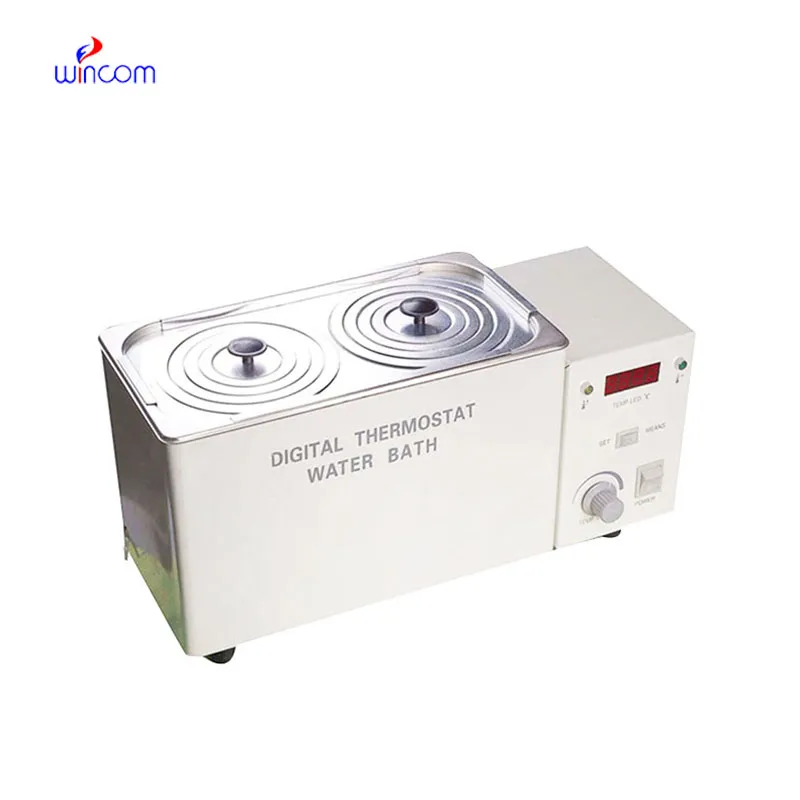
The laboratory water baths factory has functionality with advanced temperature control technology. Its heater system includes stable thermal consistency, whereby each sample in the chamber undergoes equal heat exposure. The laboratory water baths factory enables precise temperature setting and adjustments with an easy-to-use digital control panel. Its stainless-steel tank includes superior corrosion resistance and chemical reaction resistance. With built-in protection features such as thermal cut-off and water level sensing, the laboratory water baths factory is all about performance and protection. It is best for regular lab applications and for certain scientific applications.

Both in commercial and school settings, the laboratory water baths factory provides stable heat for experiments that necessitate temperature-driven conditions. It is used in processes such as protein digestion, bacterial culture, and heating of reagents. The laboratory water baths factory is also crucial in environmental analysis where accuracy in temperature control of incubating samples is needed. The laboratory water baths factory' reliability supports laboratories in conducting standard experiments as well as complex research studies. The laboratory water baths factory' stable performance ensures reproducibility and reliability, boosting laboratory results' credibility across various fields.
With advancing laboratory technology, the laboratory water baths factory will also upgrade with increased performance and connectivity. The addition of artificial intelligence will enable predictive temperature control with automatic adjustment by experiment type. Data storage capacities will enable precise records of temperature histories for ensuring compliance and reproducibility. Energy-saving properties will also be added to the laboratory water baths factory. Its advancement will be necessitated by the need for precision, ease, and sustainability in the current research settings.

Maintenance of laboratory water baths factory involves periodic cleaning and inspection cycles. Unplug the device and let it cool down completely. Clean the interior using non-abrasive cleaning materials to prevent scratching. Use deionized water to limit mineral deposition and maximize heating efficiency. Check for rust or deposition on metal components. Ensure the temperature sensor is covered up to the hilt in use. Regular maintenance prevents the laboratory water baths factory from delivering optimal performance and shortening the lifespan of its heater elements.
A laboratory water baths factory delivers even heating for laboratory purposes where accuracy is essential. It holds water at fixed temperatures for such procedures as bacterial culture incubation, heating of reagents, and thawing of samples. The internal temperature sensors and thermostat of the **laboratory water baths factory** facilitate even conditions during use. Its stainless-steel chamber is corrosion-resistant, with security features protecting samples from overheating. The **laboratory water baths factory** facilitates reliability and consistency that enable precise scientific and experimental methods.
Q: What is the primary function of a water bath in the laboratory? A: A water bath is used to maintain samples at a constant temperature for extended periods, providing stable heating conditions for experiments and reactions. Q: Why is distilled water recommended for use in a water bath? A: Distilled water is preferred because it prevents mineral buildup, reduces corrosion, and helps extend the lifespan of the equipment. Q: How often should the water in a water bath be replaced? A:When contamination or visible residue occurs, it should be replaced at least once a week or more frequently to ensure cleanliness and accurate heating performance. Q: What safety measures should be taken when operating a water bath? A: Users should avoid overfilling, keep electrical components dry, and regularly check temperature controls to prevent overheating or short circuits. Q: Can a water bath be used for heating flammable liquids? A: No, flammable liquids should never be heated in a water bath, as vapors can ignite when exposed to heat or electrical sparks.
I’ve used several microscopes before, but this one stands out for its sturdy design and smooth magnification control.
The centrifuge operates quietly and efficiently. It’s compact but surprisingly powerful, making it perfect for daily lab use.
To protect the privacy of our buyers, only public service email domains like Gmail, Yahoo, and MSN will be displayed. Additionally, only a limited portion of the inquiry content will be shown.
Could you please provide more information about your microscope range? I’d like to know the magnif...
We’re interested in your delivery bed for our maternity department. Please send detailed specifica...
E-mail: [email protected]
Tel: +86-731-84176622
+86-731-84136655
Address: Rm.1507,Xinsancheng Plaza. No.58, Renmin Road(E),Changsha,Hunan,China


 EN
 af
 es
 ar
 tr
 sw
 pt
 th
 ur
 bn
 ne
 vi
 km
 lo
 de
 ru
 fi
 nl
 fa
 fr
 ko